Click to watch the video
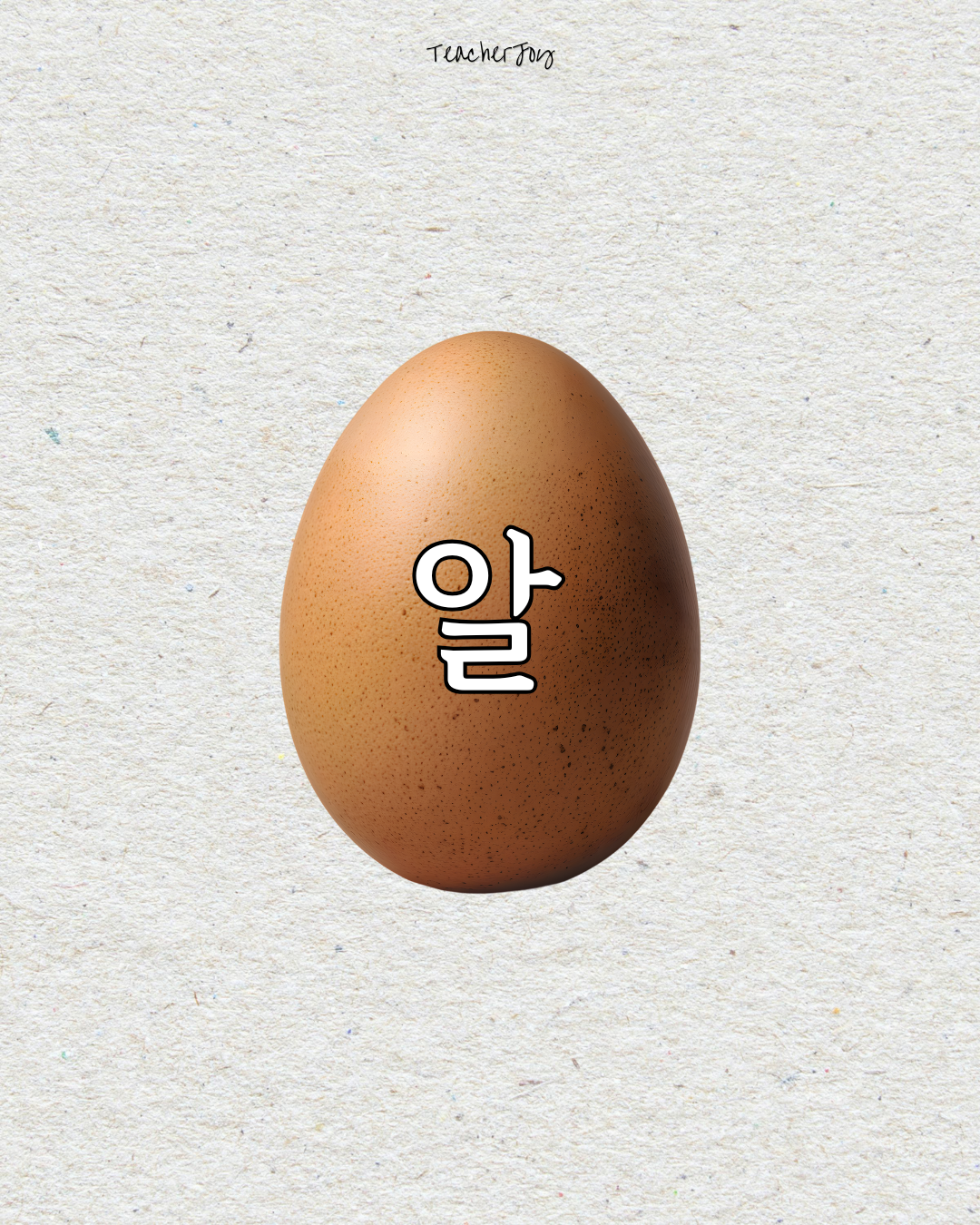
In Native Korean, we call this “알.” It’s small, round, and represents the core or the source of all life. Interestingly, this tiny word is also linked to the meaning of the verb “알다,” which means “to know.”
Think about something we eat almost everyday: an egg! In Native Korean, it’s 달걀, and in Sino-Korean, it’s 계란. “달걀” actually originated from the phrase “닭의 알,” meaning “a chicken’s egg,” which eventually evolved into the single word we use today.
Because “알” carries such a central, essential meaning, it’s used very productively as a suffix in many other words. Let’s look at some examples:

- 알: egg
- 밥알 [바발]: grain of cooked rice
- 총알: bullet
- 알몸: naked body
- 알약 [알략]: pill
- 알맹이: the key part
- 알통: flexed muscles
- 알거지: person with no property at all
- 알부자: person of substantial property